Aufsatz | Zur Philologie der Kybernetik

Der Beitrag “Diesseits des Regelkreises” von Sergiusz Kazmierski vereinigt eine Auswahl von Begriffsfeldern (so u. a. “Autonomie”, “Globalisierung” und “Information”), welche, ob ausdrücklich oder unausdrücklich, als für den modernen Universitätsbetrieb und sein Verständnis leitend oder grundlegend erwiesen werden. Diese Begriffsfelder verweisen auf einen Grundzug un­se­rer Gegenwart, der als kybernetisch bezeichnet werden kann, welcher alles Erfahren und Er­ken­nen, Verstehen und Begreifen, Tun und Lassen der wertend-rechnenden, maschinellen Logik von Input, Verarbeitung, Output und Feed­back unterstellt wissen will.

*

Eduardo Chillida, Peine del viento

*

Kazmierski – Diesseits des Regelkreises

Seminario | Geschichte e Historie in Martin Heidegger

Questo contributo di Ivo De Gennaro e Gino Zaccaria – che rielabora i materiali di un seminario tenuto all’Università di Verona il 1° aprile 2026 – affronta la distinzione, decisiva nel Denkweg di Heidegger, tra la Historie e la Geschichte: distinzione che la consueta resa italiana, con l’unica parola «storia», oblitera irrimediabilmente. Sulla scorta di una serie di traduzioni esplicitanti vengono letti quattro passi tratti dai volumi 69, 70, 71 e 96 della Gesamtausgabe, nei quali la Historie viene diagnosticata come computazione del trascorso al servizio dell’autoassicurazione, e infine, nella temperie della compiuta de-genitura, come supremazia incondizionata che assume la figura del «balcone storico».

Due Appendici e un Addendum accompagnano il testo. La prima appendice offre una traduzione esplicitante del brano della Poetica aristotelica sulla differenza tra ποίησις e ἱστορία; la seconda commenta i frammenti eraclitei B 35 e B 129, nei quali risuona – quale «maltecnia» – l’eco che Heidegger fa udire nella tedesca Historie. L’Addendum, infine, riporta un estratto da Hind Swaraj or Indian Home Rule (1909) di M. K. Gandhi, nel quale emerge una sorprendente affinità con la diagnosi fenomenologica di Heidegger.

*

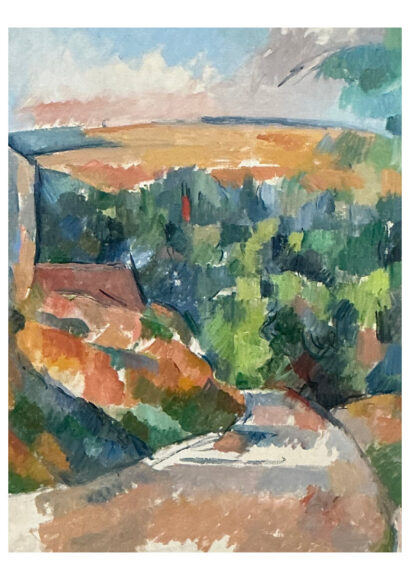
Paul CézanneLa route tournante (1900–1906)

*

De Gennaro e Zaccaria – Geschichte e Historie

Translation | The Tale (Die Zahl)

“The Tale” is an attempt of translation, conducted by Daniel Zaruba, Thomas O’Halloran Jr. and Jack Krasuski, of the text “Die Zahl” by Ivo De Gennaro, published on eudia on January 1st, 2014.

In an explanatory note on the translation of Zahl with the English tale, the translators write, among other things:

Both tale and telling speak within the dimension of Lichtung, the clearance of being-itself: They indicate the fitting appearance of things in the light of their sooth. The tale allots every beënt its respective time-play-space for its own selving; in doing so, it simultaneously gathers the beënt into its world-bearing wholeness.

*

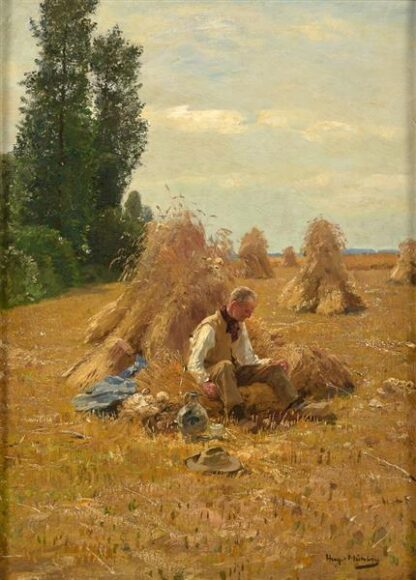
Hugo Mühlig, Die Mittagsrast

*

Zaruba, O’Halloran Jr., Krasuski | De Gennaro – The Tale

Essay | Gesetze des Totalitarismus

Jürgen Gedinats Beitrag “Gesetze des Totalitarismus” gibt eine Auslegung der Analyse und Interpretation des Totalitarismus durch Hannah Arendt.

Dazu heißt es einleitend:

Mit Hannah Arendt können wir fragen: was ist der Sinn von Tota­litaris­mus? Und eine knappe Antwort ist: Totalitarismus ist organisierter Terror, Staats­terror, Schreckens­­herr­­schaft. Wie organisiert ein Staat Angst und Schrecken und warum tut er das? Wa­­rum terrorisiert ein Staat seine Bevölkerung?

*

Man Ray, Cadeau (1921)

*

Gedinat – Gesetze des Totalitarismus

Saggio | Nullo animi labore. Una nota sull’uso responsabile dell’intelligenza artificiale

Il saggio di Ivo De Gennaro prende avvio da una definizione dell’intelligenza intesa come tratto costitutivo dell’essere umano, il quale implica una responsabilità – distinta da quelle giuridica e morale – che possiamo chiamare «etica». Sulla scorta di un noto passo di Leibniz sull’uso della macchina aritmetica, si procede quindi all’elaborazione di alcuni elementi di una critica dell’intelligenza che possono servire ad orientare un uso eticamente responsabile dell’intelligenza artificiale.

*

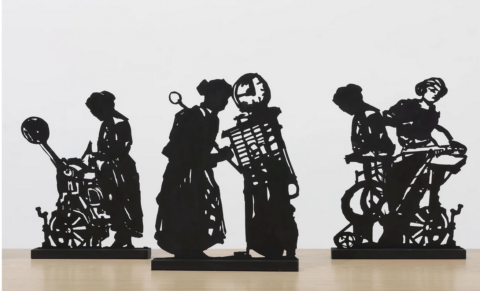
William KentridgeProcession of Reparationists – Marquettes (dettaglio) (2018)

*

De Gennaro – Nullo animi labore

New book | Science Under the Yoke of Value

Science Under the Yoke of Value. A Phenomenological Inquiry into the Evaluation Machinery, co-authored by Maurizio Borghi, Ivo De Gennaro and Gino Zaccaria, examines how science today is fundamentally governed not by an autonomous quest for knowledge and truth, or by the advancement of society, but by coercion to cater to a machinery that feeds on, and in its turn produces, self‑implicating values of “quality”, “impact”, or “productivity”, with disruptive consequences for scientific life as a whole.

Drawing on phenomenological analysis and the insights of thinkers like Plato, Aristotle, Galilei, Kant, Husserl, Einstein, Heidegger, and Arendt, this book exposes how scholarly pursuits worldwide have become subjugated by non‑scientific values. It challenges the uncritical acceptance of evaluation practices that threaten to transform academia into a self‑perpetuating system where scholars labour under what the authors aptly term “the yoke of value”. Readers will gain profound insights into the philosophical underpinnings of academic evaluation, moving beyond common discussions of “bureaucratization” or “corporatization” to question the very concept of value that drives these systems. This book uniquely interrogates why enormous resources are devoted to evaluation systems without examining whether these values truly serve science or society, thereby diverting attention from the true menace to present‑day scientific enquiry. This critical analysis helps scholars understand the mechanisms that “magically” prevent questioning of the system itself, offering a framework to recognize how scientific autonomy has been compromised and what this means for the advancement of knowledge.

The book is published in open access; it can downloaded for free here.

Translation | Die Fremde ◆ The fremdness

The year that is ending and the one that is about to begin mark the 50th anniversary of Hannah Arendt’s and Martin Heidegger’s death, respectively. The poem Die Fremde, which we present here together with an English translation by Daniel Zaruba, Thomas O’Halloran Jr. and Jack Krasuski, was written by Heidegger in 1950 “after – the translators write – unexpectedly meeting again with Hannah Arendt”.

*

Caspar David Friedrich, Tageszeitenzyklus – Der Abend (1821-22)

*

Zaruba, O’Halloran Jr., Krasuski – The fremdness

Neuerscheinung | Das Ende der Notstandsethik

Im Zentrum des Buches von Ralf Lüfter steht die Frage nach der Zukunft der Ethik. Es geht dabei nicht um die Rolle und die Funktion der ethischen Theoriebildung im Kontext zu erwartender Entwicklungen, sondern in erster Linie um eine phänomenologisch orientierte Untersuchung des Vermögens der Ethik, sich auf die Offenheit des Künftigen so einzulassen, dass die Zukunft nicht primär von Vergangenem her erschlossen wird.

Unten verlinkt ist die Einleitung zum Buch.

*

Ralf Lüfter, Das Ende der Notstandsethik, Königshausen & Neumann, 2025

*

Das Ende der Notstandsethik – Einleitung

Essay | Dark intelligence

This article by Joaquin Trujillo proposes supplanting the sobriquet – “artificial intelligence” (AI) – with “dark intelligence” to offset the presuppositions that seem to be belying the technology and are commensurate with a disregard of the originary comprehension of being. A hermeneutic-phenomenological perspective is enacted. The report discerns the comprehension of being – the pre-thematic understanding of “is” – as the ownmost of human intelligence, identifies inconsistencies in the “artificial intelligence” appellation correlated to Dasein’s factical obliviousness to the existential (constitutive moment of human being), and lays out the case to replace the moniker to clarify the way AI is thought.

A related article by the same author can be found here.

*

George Politis, Out of the Blue (2023)

*

Trujillo – Dark intelligence

Translation | ΣΧΟΛΗ. Plato and the economic problem

Formally speaking, the text we publish here is a translation of an essay written by Ivo De Gennaro, conducted by Daniel Zaruba, Thomas O’Halloran Jr. and Jack Krasuski. In truth, however, it is not a translation in the ordinary understanding of this word, nor is it simply “more” than a translation; rather, it is an attempt, conducted in English, to say the same as that which another essay attempts to indicate in German. When an attempt responds to another attempt in this manner, the common distinction between “original” and “translation” becomes obsolete, just like “authors” and “translators” are in the same way creators of a “source text”.

*

Vincent van Gogh, Wheat field at sunset (1888)

*

De Gennaro, Scholé – Zaruba, O’Halloran Jr., Krasuski