Novità

Ultimi libri inseriti nella libreria di eudia:
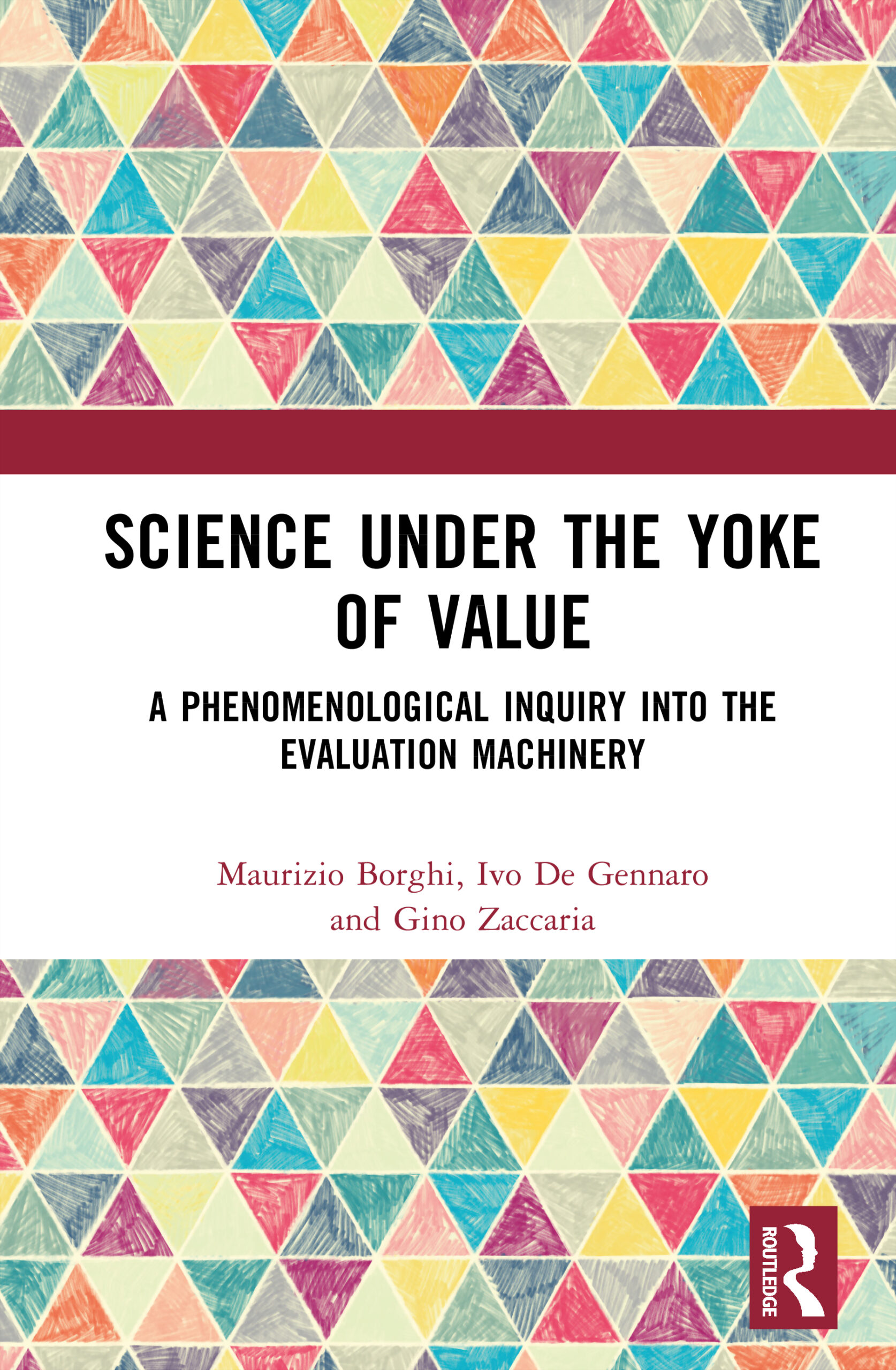
Science Under the Yoke of Value. A Phenomenological Inquiry into the Evaluation Machinery, co-authored by Maurizio Borghi, Ivo De Gennaro and Gino Zaccaria, examines how science today is fundamentally governed not by an autonomous quest for knowledge and truth, or by the advancement of society, but by coercion to cater to a machinery that feeds on, and in its turn produces, self‑implicating values of “quality”, “impact”, or “productivity”, with disruptive consequences for scientific life as a whole.
Drawing on phenomenological analysis and the insights of thinkers like Plato, Aristotle, Galilei, Kant, Husserl, Einstein, Heidegger, and Arendt, this book exposes how scholarly pursuits worldwide have become subjugated by non‑scientific values. It challenges the uncritical acceptance of evaluation practices that threaten to transform academia into a self‑perpetuating system where scholars labour under what the authors aptly term “the yoke of value”. Readers will gain profound insights into the philosophical underpinnings of academic evaluation, moving beyond common discussions of “bureaucratization” or “corporatization” to question the very concept of value that drives these systems. This book uniquely interrogates why enormous resources are devoted to evaluation systems without examining whether these values truly serve science or society, thereby diverting attention from the true menace to present‑day scientific enquiry. This critical analysis helps scholars understand the mechanisms that “magically” prevent questioning of the system itself, offering a framework to recognize how scientific autonomy has been compromised and what this means for the advancement of knowledge.
The book is published in open access; it can downloaded for free here.
Esce oggi in libreria, per i tipi di Olschki, il nuovo libro di Gino Zaccaria, intitolato Meditazioni scismatiche. Il nulla e il tempo, l'infinito e l'arte.
Il libro si articola in dodici meditazioni che muovono i propri passi in quella primigenia dimensione — denominata «scisma» — grazie alla quale il pensiero può dedicarsi a uno fra i compiti che la tradizione filosofica, nell’epoca della sua fine, gli assegna: concepire il nulla in modo che il tempo, l’infinito e l’arte siano fondati e istituiti nei loro rispettivi tratti originari, e perciò stesso futuri. Tutto allora si tramuta, divenendo scismatico: il nulla si libera di ogni metafisica vuotezza e inizia a risuonare come l’ineludibile richiamo a prestare ascolto alla voce del dio scomparso nell’annichilimento dell’essere; il tempo si scinde sia dall’attimo che scade (“tempo-scadenza”) sia dall’eternità (“tempo-estensione”) per assumere la tempra dell’istante che, nella misura in cui genera lo spazio e i suoi luoghi, restituisce all’uomo l’attesa di un genuino abitare terrestre; l’infinito si ritrae dalla sua avvilente sterminatezza e si configura come il celeste invito all’assunzione di una retta finitudine. Così l’arte può affrancarsi dal suo odierno destino tecnico-cibernetico, che la costringe ad apparire innanzitutto come “espressione” e “creatività”, per riaversi nella sua provenienza e infine nella sua genuina aspirazione.
*
*
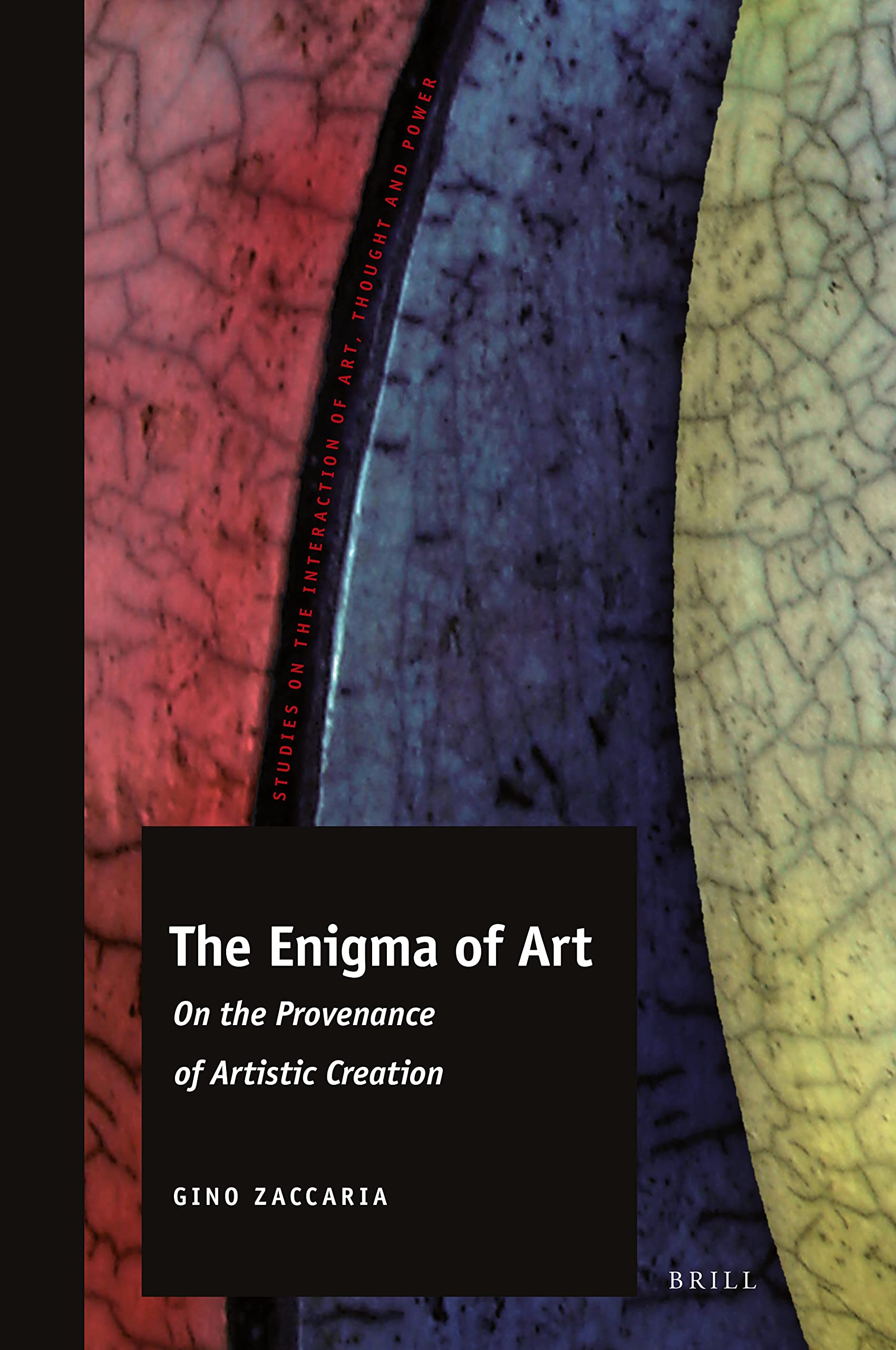
In this book, Gino Zaccaria offers a philosophical meditation on the issue of art in light of its originary sense.
He shows how this sense can be fully understood provided that our thinking, on the one hand, returns to the ancient Greek world where it must heed the voice and hints of the goddess Athena, and, on the other hand, listens to “artist-thinkers” close to our current epoch, such as Cézanne, van Gogh and Boccioni.
Indeed, the path of this meditation has as its guide the well-known sentence by the painter from Aix-en-Provence, which reads: “Je vous dois la vérité en peinture, et je vous la dirai !”.